OneBit Adventure Roguelike RPG
- 4.7
- Rating
- 1.00M
- Installs
- Free
- Price
 Analysis by App-foxy
I picked up OneBit Adventure expecting a small pixel dungeon game, but its simple presentation hides a surprisingly demanding loop. It is an adventure game from Galactic Slice that combines role-playing progression with roguelike risk: I enter dangerous areas, collect useful gear, make decisions about how far to push, and try to survive long enough for each run to feel worthwhile. The free entry point makes it easy to try, while the offline format suits short sessions when I do not want to depend on a connection.
What makes it interesting in a shared household is that it does not require the whole room to follow a long story or wait for another player. Someone can use the device for a quick attempt, hand it back, and the next person can start their own run. That convenience comes with an important boundary, though: this is still a game built around personal progress and repeated failure. If several people use one phone or tablet, agreeing who plays which save and when to stop matters more than it might in a casual puzzle game.
How the dungeon loop feels in everyday play
I focus here on how the dungeon loop fits into ordinary breaks, where a little planning can make a short session feel satisfying rather than rushed. I also consider the small practical choice of when to stop: in a game built around risk, setting a boundary before you begin can help you enjoy the challenge without letting one more attempt take over your time.
You May Also Like

 Blood Strike: 2.5 Anniversary
Blood Strike’s Loadouts Turn Every Drop Into a Tactical Gamble
A close look at Blood Strike’s custom loadouts: how fast access to signature weapons reshapes its battle royale rhythm, rewards preparation, and narrows the gap between fights.

 Pandora - Music & Podcasts
Pandora’s Music Is Easy to Start, but Harder to Recover
Pandora’s strength is its low-effort path from a seed to a station. Its weak spot is how much confidence it asks you to place in connection, setup, and quiet recovery.

 8 Ball Pool
 Is Built on Rivalries, Rematches, and Routine
A close look at the rivalries, rematches, shared routines, and unanswered safety questions that turn a quick pool match into a persistent mobile community.

 Samsung Music
’s Quiet Strength Is Playing What You Already Own
Its reach comes less from spectacle than from dependable access to a personal library. That simplicity is both the app’s strongest retention engine and its ceiling.

 AccuWeather: Weather Radar
AccuWeather Review: A Quick, Clear Forecast for Everyday Decisions
For everyday plans, the best forecast is the one you can understand quickly. AccuWeather makes rain timing, radar, and local conditions easy to act on, with a few trade-offs.

 Hill Climb Racing
Why Hill Climb Racing Still Turns Crashes Into One More Run
A tiny car, a bumpy hill and one more upgrade: Hill Climb Racing keeps resurfacing because its simple chaos makes every near-miss feel personal.
More From Our News Desk
View All News


A compact adventure that rewards attention
The appeal is not based on cinematic presentation. The pixel-art style keeps the screen readable, and the adventure structure puts the focus on choices rather than spectacle. I found myself thinking about whether a reward was worth the danger, whether I should continue exploring, and how much progress I was willing to risk. That makes each short session feel like a small decision-making exercise instead of a passive time filler.
The roguelike design also changes how I judge failure. Losing a run can be frustrating, especially when I have gathered equipment or reached a promising stretch, but the format expects experimentation. A poor attempt can still teach me which situations to avoid, how aggressively to move, and when a tempting detour is not worth taking. Players who need constant permanent progress may find this harsh; players who enjoy learning through repeated attempts will probably understand the appeal quickly.
In a normal day, I can imagine using it during a commute, while waiting for an appointment, or during a short break when I have enough concentration for a game but not enough time for a long campaign. Because the game is playable offline, I do not have to plan around unreliable reception. That is one of its most practical strengths, particularly on a device that is also used for travel or in parts of the home where the connection is inconsistent.
Why the pixel format works better than expected
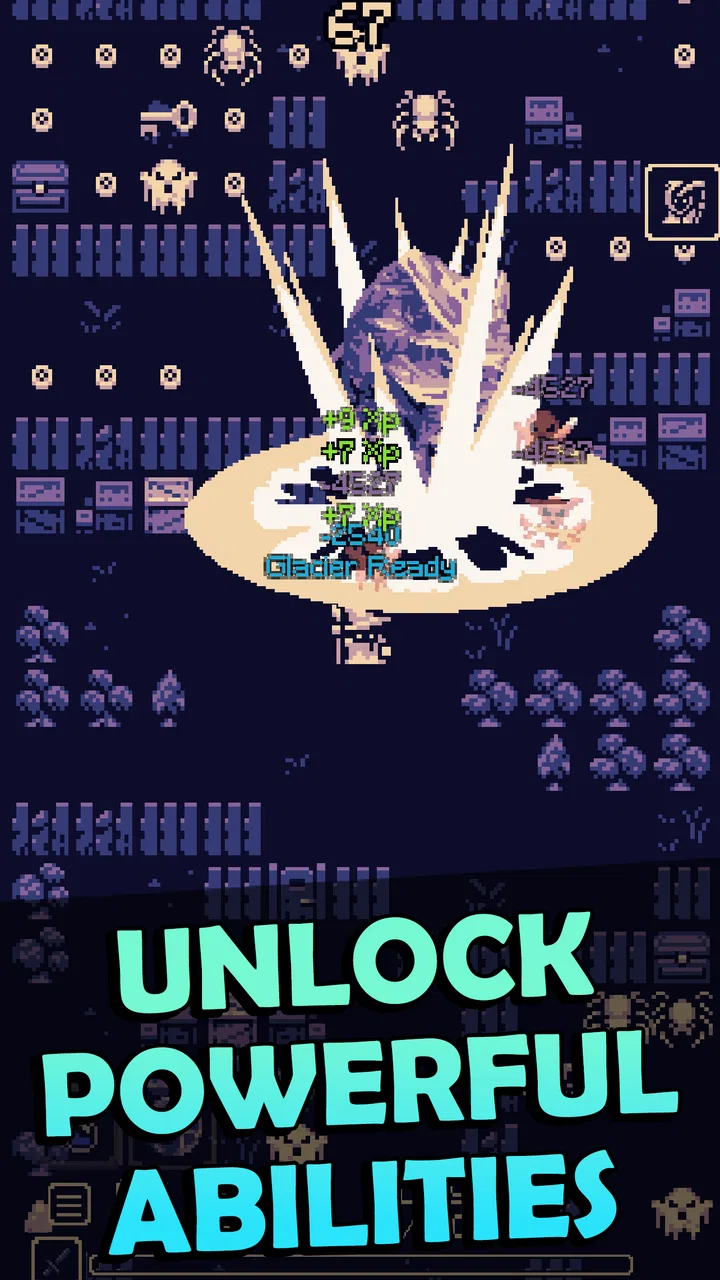
The restrained visual style is not merely a nostalgic coating. It helps separate the important elements of a busy dungeon and keeps the game from demanding high-end hardware or a large display. I could concentrate on movement, threats, loot, and the next decision without the interface being buried beneath elaborate effects. On a smaller phone, that clarity is more valuable than graphical ambition.
There is a trade-off. Anyone looking for a story-heavy adventure with expressive characters, voice acting, or elaborate environments will not get that experience here. OneBit Adventure is more about the rhythm of entering, evaluating, surviving, and trying again. I would place it closer to a focused dungeon challenge than to a traditional mobile role-playing epic.
Progression is strongest when I treat runs as experiments
My most useful adjustment was to stop treating every run as a race toward the deepest possible point. Early choices are valuable because they reveal how the game wants me to think. I learned more by testing a cautious route, observing the consequences, and changing one habit at a time than by rushing forward and blaming bad luck. That approach also makes the game less tiring during longer play sessions.
A practical tip for new players is to pause mentally before collecting every attractive reward. Loot has value only when it helps me survive the next danger or supports a clear plan. Taking everything can encourage careless movement and make the run feel cluttered with decisions. I also prefer ending a session after a meaningful attempt rather than continuing when I am distracted. In a game where one impatient choice can erase a run, attention is part of the equipment.
Another useful habit is separating curiosity from commitment. I can explore a dangerous option when I am prepared to lose the current attempt, but I should not pretend that every unexplored path is automatically worth taking. That distinction is especially helpful for younger players, who may otherwise interpret every setback as unfair rather than as the result of a deliberate risk.
Shared devices need a simple handoff routine
For a household sharing one phone or tablet, I would establish a clear handoff rule before anyone begins. The player should finish the immediate action, make sure the game is in a safe state, and say whether the current run is still active. A roguelike is not ideal for grabbing the device in the middle of a tense decision, because another person may accidentally move, spend a resource, or end the attempt.
I would also avoid assuming that multiple people can freely keep separate progress unless the game visibly offers the required separation on the device. The safest approach is to check the available in-game options before committing a family routine to it. If the household needs several independent profiles, strict account boundaries, or guaranteed child-specific progress, a game designed around those functions may be a better fit.
This is not a criticism of the core adventure. It is a reminder that offline convenience and shared-device organization are different things. The game works well when one person owns the session at a time. It becomes less comfortable when several players expect the same installation to behave like a multi-user family platform.
Setup is easy, but expectations should be set early
The game is free to start, which lowers the barrier for trying it on an Android device that runs at least version 7.1. The current version is 1.3.424, and the title has been available since Aug 2, 2019. Those details matter less than the practical point: it is positioned as an accessible mobile game rather than a demanding new release that requires recent hardware.
There are in-app purchases ranging from $0.99 to $49.99 per item. I would discuss that clearly before placing the game on a shared device, especially if a child can use the same phone or tablet. The sensible household arrangement is to decide in advance whether purchases are allowed, who approves them, and whether the device owner must be present. The game’s free price does not mean every optional transaction should be treated casually.
I would also explain the nature of the game before handing it to a younger player. “Free adventure game” can sound like a relaxed exploration title, while the roguelike structure means failure and repetition are central. A child who enjoys retrying and learning will likely find that satisfying. A child who becomes upset when progress disappears may prefer a gentler adventure with more predictable saving and less risk.
Age context and trust matter more than the label alone
OneBit Adventure is rated Everyone, so it is broadly positioned for a general audience. That is useful context, but an age label cannot predict whether the gameplay will suit every child. The main question in my view is emotional tolerance for setbacks, not whether the presentation is too mature. The pixel style is approachable, yet the repeated danger can still feel demanding for a young or easily frustrated player.
For older children and adults, the game can be a good independent activity because it does not require a parent or sibling to explain a complicated narrative every few minutes. I would still check in occasionally, not to control every decision, but to see whether the player understands that losing a run is part of the design. That conversation can prevent unnecessary arguments over a game that is intentionally built around risk.
Trust also applies to device use. Since the game supports offline play, a player may be able to continue without the household noticing when a session began or ended. That is convenient for personal use, but shared routines benefit from simple communication: say when the device is available, avoid interrupting an active attempt, and do not assume that “just one turn” will be brief when the player is close to a goal.
How it compares with more familiar mobile alternatives
Compared with a standard casual game, OneBit Adventure asks more from me. A match-three title or endless runner can offer quick entertainment with little memory between sessions. Here, I need to remember what I was trying to accomplish, recognize when I am taking a bad risk, and accept that a run may end without a neat reward. That extra friction is precisely what gives the game more staying power for the right player.
Compared with a large online role-playing game, it is much easier to fit into ordinary life. I do not need to coordinate with a guild, wait for a matchmaking queue, or reserve a long uninterrupted block for a mission. The offline design is a major advantage when I want a self-contained activity. The compromise is that I do not get the social energy, shared world, or live cooperation that make online alternatives attractive.
It also differs from story-led adventure games. Those usually give me a clearer sequence of authored events and a stronger sense of destination. This game instead creates interest through replayable decisions and survival pressure. If I want to discover a carefully paced plot, I would choose something else. If I want a portable challenge that changes with my choices and keeps asking me to improve, this is the more suitable option.
Who should try it, and who should skip it
I would recommend it to players who enjoy pixel-art games, dungeon exploration, equipment decisions, and the satisfaction of improving after a failed attempt. It is especially suitable for someone who wants an offline adventure that can be played in short bursts but still has enough depth to reward longer attention. The free starting price also makes it practical for testing whether the roguelike loop matches personal taste.
I would skip it for anyone who wants a calm game with guaranteed forward movement, a strong cinematic story, or a multiplayer activity for friends and family. I would also be cautious about installing it on a shared device when the household expects separate accounts or when purchase boundaries are difficult to enforce. The game can be family-compatible in age terms without being a perfect fit for every family arrangement.
Players who dislike repeating content should give it a short trial rather than assuming the genre will change later. The central appeal comes from returning to the challenge with better judgement. If that cycle feels like wasted time after several attempts, no amount of pixel charm will fix the mismatch. On the other hand, if each failure reveals a decision I can improve, the repetition becomes the reason to continue.
Small habits that make the experience better
I recommend beginning with a quiet, focused session instead of playing for the first time while distracted. The controls and rules are easier to understand when I can observe what each choice does. Once the rhythm becomes familiar, the game fits naturally into waiting rooms and travel breaks, but the first attempt deserves enough attention to establish good habits.
For shared use, keep the device charged before starting a serious run and avoid treating a low-battery warning as an invitation to rush. The game is designed for mobile play, yet a rushed final minute is exactly when careless decisions happen. In my experience, a deliberate stopping point is better than squeezing in one more risky move simply because someone else is waiting.
I also suggest agreeing on whether the household values uninterrupted turns or quick rotation. A short rotation can work if everyone accepts that a run may end unexpectedly. If players want equal time regardless of success, use a timer or a simple turn schedule rather than relying on natural stopping points. The game itself does not solve household coordination; the players need to do that part.
What the audience response tells me
The game has an average rating of 4.7 from around 56 thousand ratings, with about 1.8 thousand written reviews and over 1 million installs. I do not treat popularity as proof that every player will enjoy it, but those figures do show that the compact roguelike idea has reached a substantial audience. More importantly, the response fits my own impression: this is a focused game with a clear identity rather than a generic adventure reskinned for mobile.
Galactic Slice has kept the project centered on that identity. The result is easy to understand at a glance, but not necessarily easy to master. That distinction is worth emphasizing to anyone choosing a game for a household: accessibility of presentation does not guarantee simplicity of play. A child or casual player may need a little explanation, while an experienced roguelike fan may appreciate being allowed to learn through trial and error.
My household verdict
After spending time with it, I see OneBit Adventure as a strong choice for a person who wants a personal, offline dungeon challenge rather than a shared social game. It is free to begin, rated Everyone, and compact enough for everyday mobile use. The pixel presentation keeps it approachable, while the roguelike structure gives each decision more weight than a disposable five-minute distraction.
For a household, I would install it with clear expectations: one player at a time, no interrupting an active run, and an agreed rule for in-app purchases. I would not present it as a universal family game or assume that one installation automatically provides clean boundaries for everyone. With those limits understood, it can work very well as a turn-based shared-device activity, especially when players enjoy comparing choices and learning from failed attempts.
My recommendation is simple: try it if you like replayable pixel adventures where survival depends on patience and judgement. Choose a different game if you need a relaxed story, guaranteed progress, or built-in household separation. For the right player, this is a thoughtful little dungeon game that turns short offline sessions into meaningful experiments, and that is more than enough reason to keep it installed.
FAQs for OneBit Adventure Roguelike RPG
01What is OneBit Adventure Roguelike RPG?
OneBit Adventure is a turn-based roguelike RPG for Android and iOS in which you explore randomly generated dungeons, fight monsters, collect equipment, and develop a customizable character. Each run can be different, and permanent progression helps you improve over time. Its pixel-art presentation and simple controls make it approachable, while the strategic combat gives experienced players plenty to consider.
02How does combat work in OneBit Adventure?
Combat is turn-based, so you can take time to study the battlefield before moving or attacking. Positioning, enemy range, health management, abilities, and equipment all matter, especially when several opponents surround you. Because enemies and dungeon layouts change between runs, rushing forward is often risky. Careful movement and resource management are essential for surviving deeper areas.
03Is OneBit Adventure free to download and play?
OneBit Adventure can generally be downloaded for free, although the exact availability of advertisements, optional purchases, or premium features may vary by platform and version. The core gameplay is designed to be playable without spending money, but optional monetization may provide conveniences or additional content. It is worth checking the current store listing before downloading, particularly if you prefer completely ad-free games.
04Does OneBit Adventure require an internet connection?
Much of OneBit Adventure’s main dungeon-crawling experience can be enjoyed offline, which makes it suitable for short sessions while traveling or when mobile data is unavailable. However, some functions may depend on an internet connection, including advertisements, purchases, updates, cloud-related services, or online events if offered in your version. For the most reliable experience, launch the game once while connected.
05Is OneBit Adventure suitable for beginners, and what should new players know?
The game is accessible to beginners because its turn-based system lets you learn at your own pace, but it still has meaningful RPG depth. New players should experiment with different classes, read ability descriptions, upgrade useful equipment, and avoid wasting health on unnecessary fights. Death is part of the roguelike design, so each failed run should help you understand enemies and improve future decisions.
Pros
- Turn-based combat makes runs easy to pause and play anywhere.
- Multiple classes offer different strategies and replay value.
- Randomly generated levels keep each adventure unpredictable.
- Simple controls work well on both phones and tablets.
- Frequent loot and upgrades make short sessions feel rewarding.
Cons
- Early runs can feel repetitive until more classes and gear unlock.
- The pixel-art presentation may not appeal to every player.
- Some progression systems take time to understand for new players.
- Random encounters can occasionally create frustrating difficulty spikes.
- Ads or in-app purchases may interrupt the free-to-play experience.

OneBit Adventure Roguelike RPG
Gallery